Share this article
22 Jan 2025
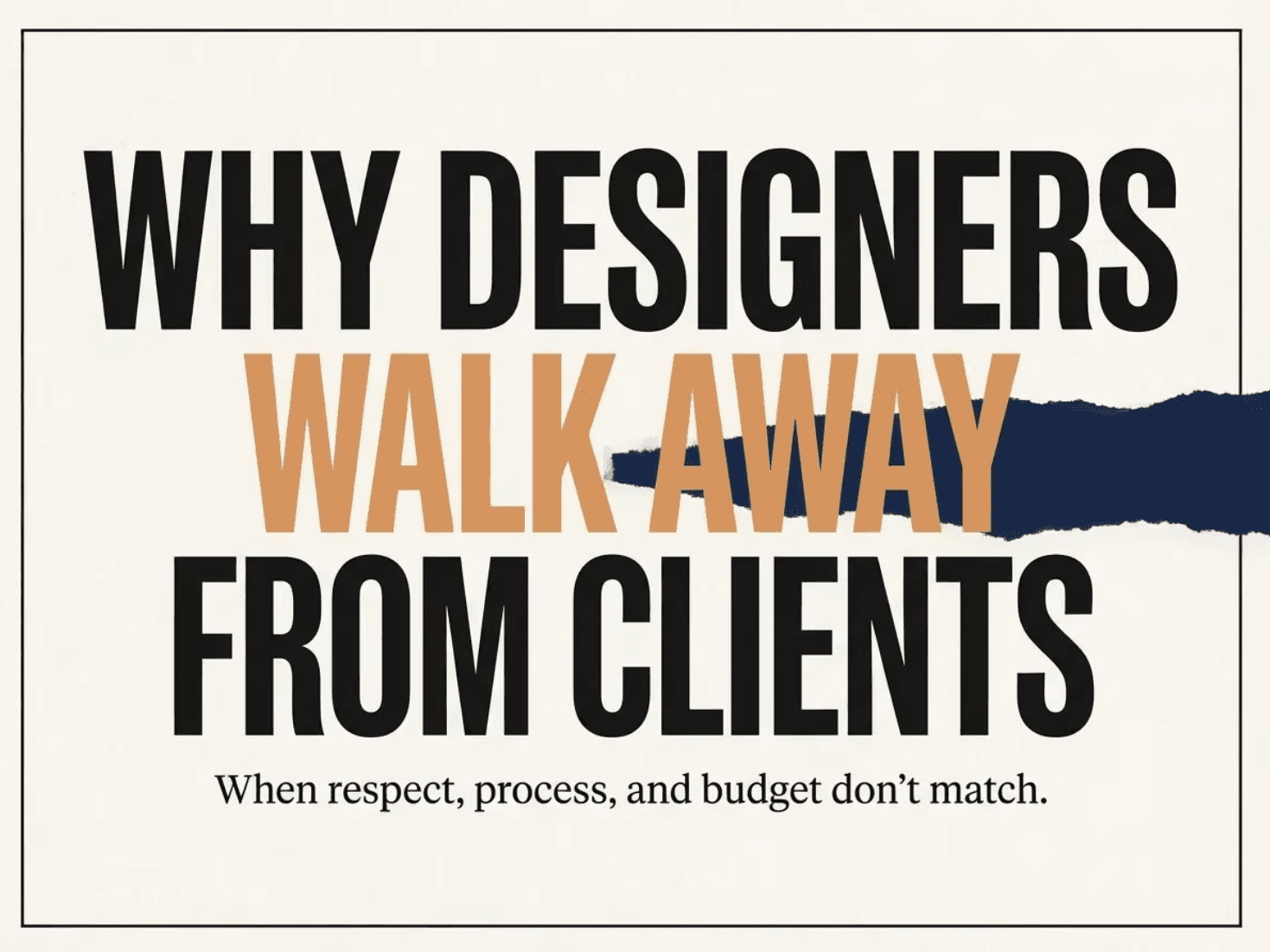
Why do designers walk away from projects?
Design is collaborative. The best work happens when a client and designer operate like partners — with clear goals, effective communication, and mutual respect. However, there comes a point when a designer must step back. This isn't due to being "difficult" or unable to handle feedback. Instead, it often arises because the relationship has become unsustainable.
The Real Reasons Designers Walk Away
1) Respect Isn’t Optional
Respect is the foundation of any successful collaboration. When a client dismisses the designer's expertise, talks down to them, or treats design as a mere task rather than a strategic service, the project shifts from collaboration to conflict. This lack of respect can lead to frustration and disengagement.
2) Disorganization Creates Unpaid Work
A lack of organization can lead to chaos. If there’s no clear point of contact, no structured process for approvals, missing files, scattered feedback, or last-minute changes, the designer often finds themselves managing the project for free. This disorganization not only wastes time but also diminishes the quality of the work.
3) Scope Creep Becomes the “Plan”
When clients frequently ask, “Can you just add one more thing?” it can quickly escalate from one request to ten. Unlimited expectations without a corresponding agreement force designers into a difficult position: either overdeliver without compensation or risk being labeled as “not helpful.” This situation is unsustainable for any designer.
4) No Budget + Big Expectations is a Mismatch
A significant mismatch occurs when a client has little or no budget but expects a full brand overhaul, a comprehensive website, social media presence, and endless revisions. This situation is not a project; it’s a business problem being unfairly handed to a designer.
5) Slow Decisions Burn Time (and Money)
When direction changes weekly, approvals are delayed, or internal teams struggle to align, designers lose valuable time that could be spent on paying work. Slow decision-making can stall progress and lead to frustration for everyone involved.
6) Constant Urgency Becomes Toxic
When everything is labeled as “ASAP,” but the client is unprepared, unresponsive, or unwilling to pay for rush fees, it creates a toxic environment. Urgency without a structured approach leads to stress, which ultimately undermines the quality of the work.
7) “Thank You” Doesn’t Pay the Bills
While gratitude is appreciated, it cannot replace fair compensation. When “thank you” is used as a substitute for payment, it becomes avoidance. Designers have real operating costs, including software, equipment, taxes, and the time and experience required to hone their craft.
8) The Risk of Nonpayment Goes Up
Clients who disregard boundaries often delay invoices, dispute charges, or vanish at the finish line. This lack of respect for financial agreements increases the risk of nonpayment for designers.
9) Reputation Gets Put on the Line
Disorganized projects can lead to rushed outcomes. Even if the chaos isn’t the designer’s fault, their name is often attached to the final result. This can damage their reputation and future opportunities.
10) Burnout is Real
When a designer is forced to take on multiple roles — project manager, strategist, emergency responder, and “fix it” person — without appropriate pay or authority, burnout becomes inevitable. This situation is detrimental not only to the designer but also to the quality of the work produced.
What Respect Looks Like (in Practice)
To foster a healthy working relationship, both parties should prioritize the following:
Clear goals and priorities
A realistic budget aligned with the project scope
One decision-maker or a defined approval process
Consolidated feedback
Timely communication
Respect for timelines, including rush fees when necessary
Consistent and timely payments
Final Thought
If you want high-quality work, treat creative endeavors as the business investments they truly are. Designers don’t walk away because clients ask questions. They leave when the relationship becomes disrespectful, disorganized, and financially unsustainable.
If you’re a designer, what’s the #1 boundary you had to learn the hard way? If you’re a client, what systems have helped you collaborate better with creatives?